— Active Excavation
The science begins at the extraction site.
Every specimen in the collection carries its stratigraphic origin. Site coordinates, extraction records, and geological context are documented before the bone leaves the ground.
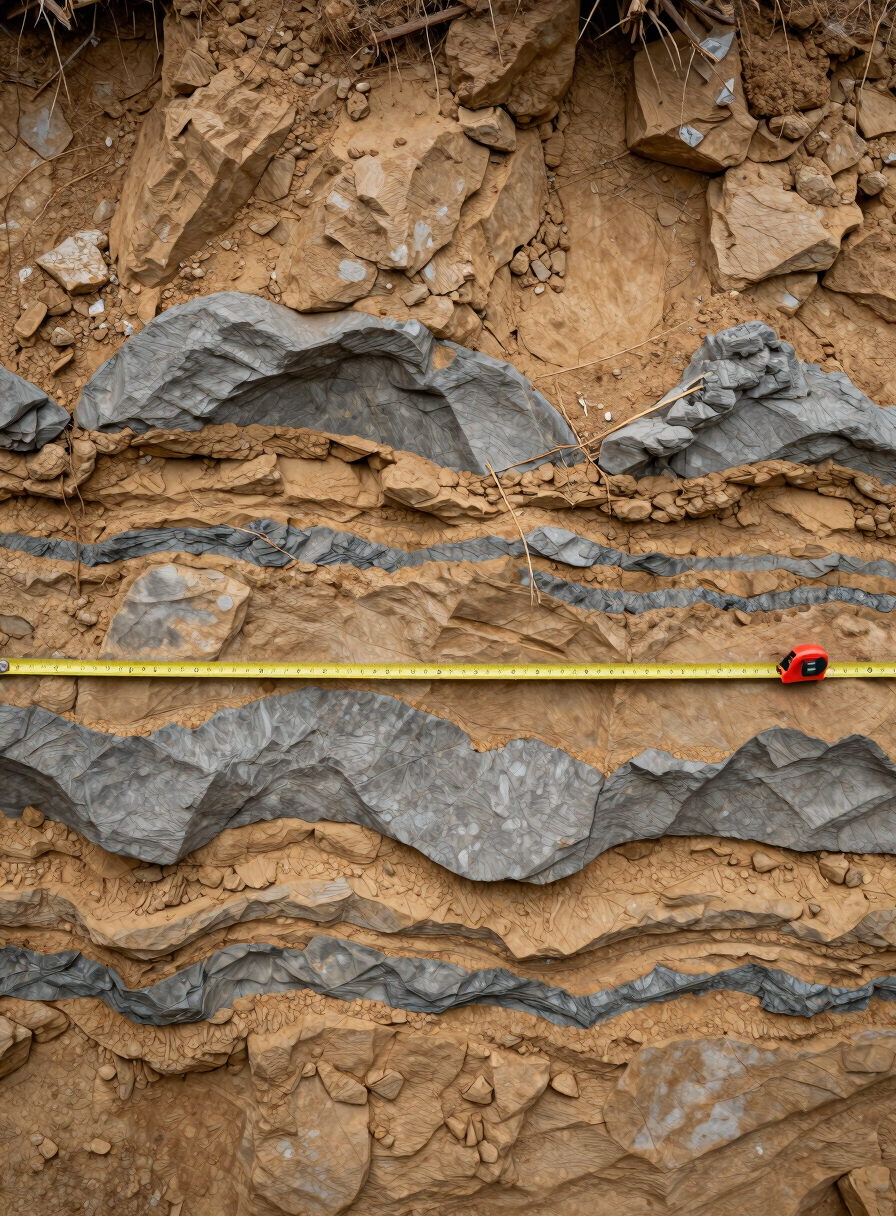
/ Site Record
Coordinates, strata, and provenance on record
Before any specimen is removed, the site is mapped and photographed at multiple scales. GPS coordinates, stratigraphic unit, and depositional context are logged in the field record.
That chain of custody is what separates a documented specimen from an unverified one. It travels with the bone from the field to the preparation lab to the display case.
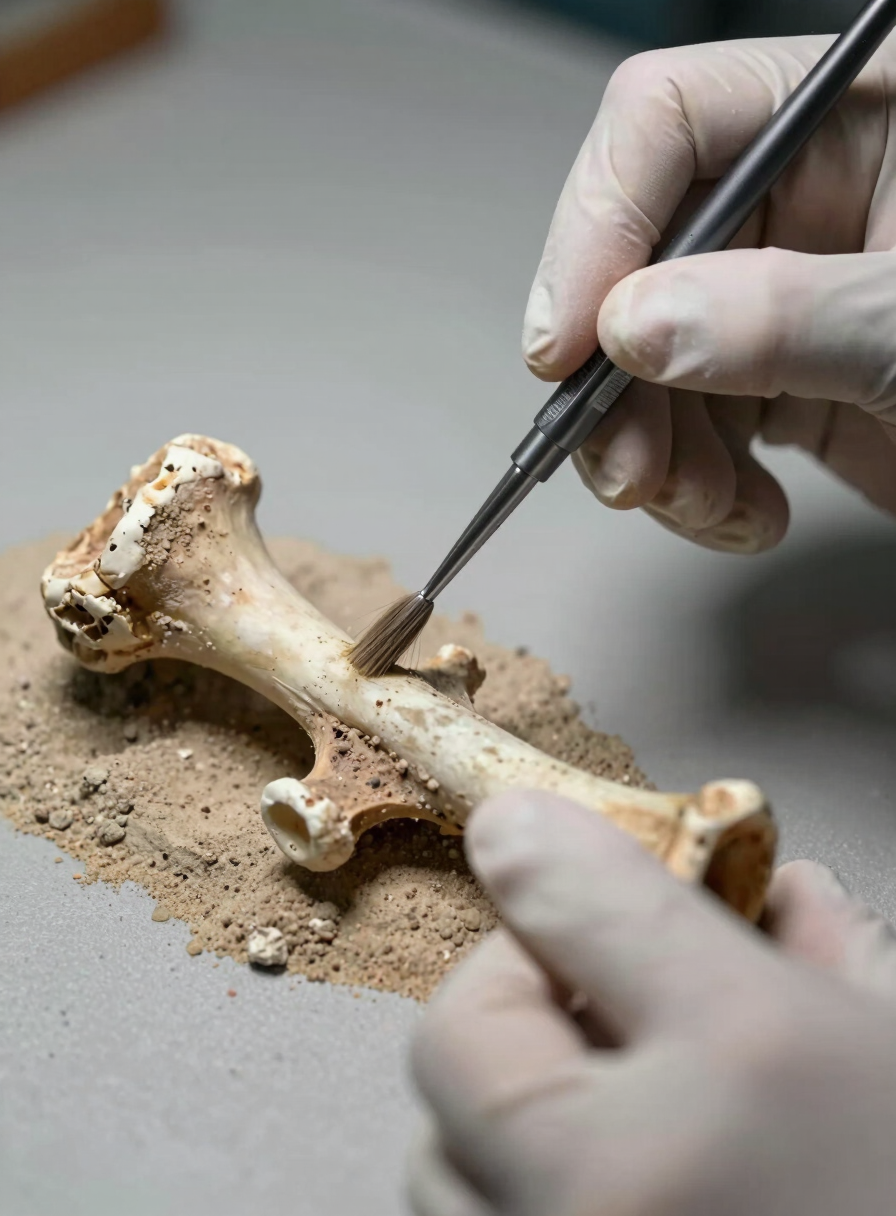
Extraction Protocol
Method is what makes evidence verifiable
Field jackets are numbered to their excavation grid squares. Every fragment removed from matrix is catalogued by depth, orientation, and associated material before it is consolidated.
The preparation lab continues this record: consolidant type, tooling method, and photographic documentation at each stage are archived alongside the specimen itself.
Current excavations in the Hell Creek and Morrison formations are adding new material to the record each season. Findings update the collection catalog as specimens move through preparation.
▸ Ongoing Research
The collection is still being written
Educators and researchers can request access to field notes and stratigraphic logs for active sites. The record is open because the science depends on it.